

Costs and Comparisons
Price ranges, cost drivers, charger types compared side by side and ways to save.
EV charging installation cost
See what drives the price of a home or small-business EV charger, how the install works from permit to inspection, and which mistakes inflate the bill.
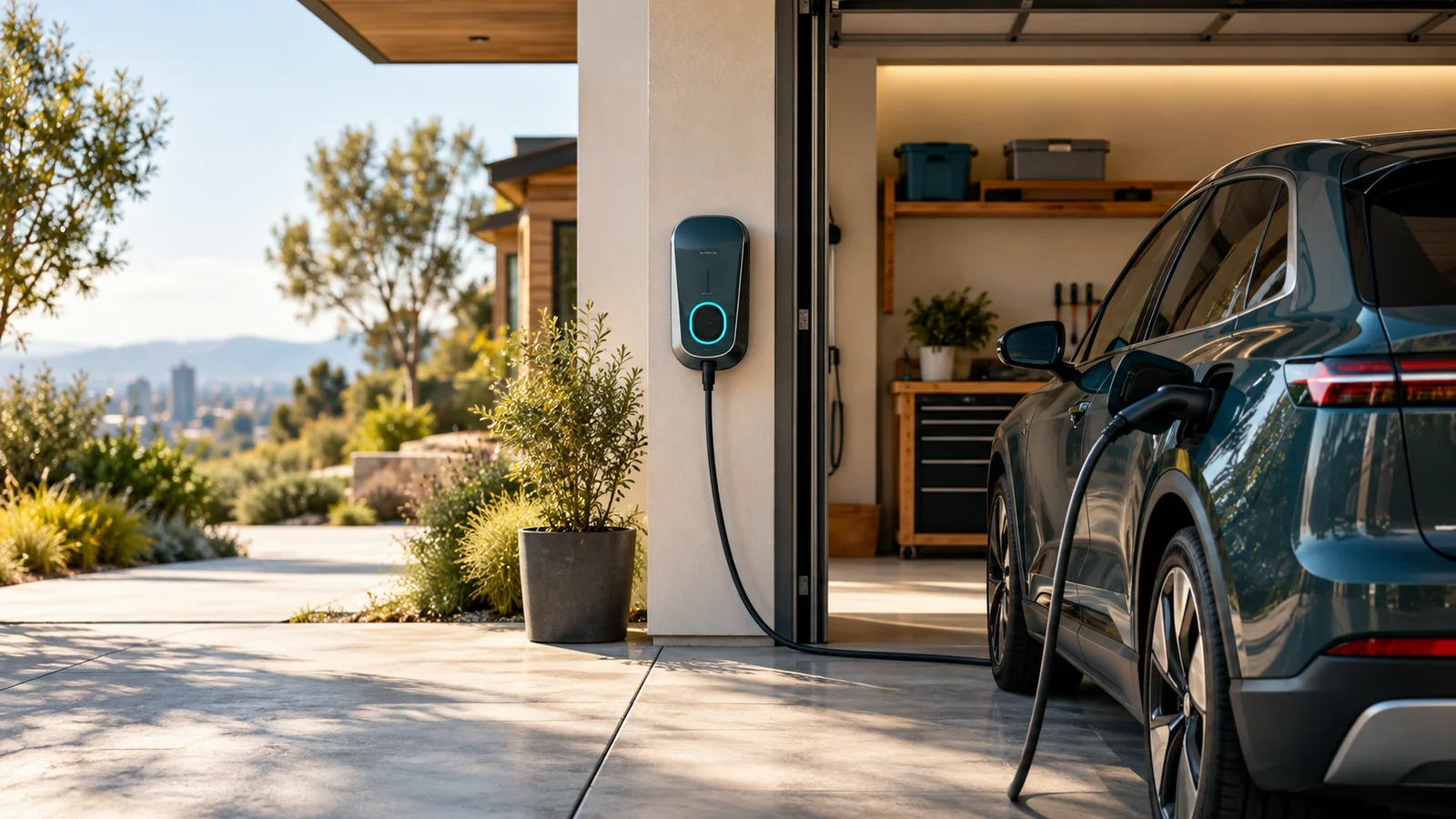
Price ranges, cost drivers, charger types compared side by side and ways to save.

Step-by-step process, permits, documents, choosing an electrician and what the timeline looks like.
Common mistakes, contractor red flags, whether a charger is worth it, and answers to frequent questions.
Getting Started and Installation
How apartment dwellers, condo owners and renters can get EV charging at home, who pays, what approvals are needed and what to do when installation is not possible.
Costs and Comparisons
A practical look at what a home EV charger installation costs in the U.S., which line items make up a quote, and how to judge whether a bid is reasonable.
Mistakes, Scams and FAQ
Ten common EV charger installation mistakes that raise costs or create safety problems, from skipping the load calculation to buying the wrong charger or ignoring permits.
Costs and Comparisons
Learn the formula for home EV charging cost per mile, compare it with gasoline and public fast charging, and see how savings affect the payback of a charger installation.
Getting Started and Installation
A step-by-step walkthrough of installing a Level 2 home EV charger in the U.S., from sizing the circuit and getting quotes to permit, inspection and first charge.
Mistakes, Scams and FAQ
Compare a plug-in NEMA 14-50 outlet with a hardwired Level 2 EV charger on cost, power, safety, flexibility and weather exposure to choose the right installation.

Estimate a low and high installed cost from your wire run length, charger option and fixed costs.

See how long a home charger takes to pay for itself versus relying on public charging or gasoline.

Estimate monthly payments if you finance a charger install or panel upgrade with a personal loan or home equity line.

A checklist to run through before you buy a charger or sign an installation contract.
| Option | How it works | Good for | Watch out for |
|---|---|---|---|
| Level 1 (120 V outlet) | Uses the portable cord that comes with many cars on a standard household outlet. | Low daily mileage, plug-in hybrids, renters, a stopgap while planning a bigger install. | Adds only a few miles of range per hour. A shared or worn outlet and extension cords are fire risks. |
| Level 2 plug-in (NEMA 14-50 outlet) | A 240 V outlet on a dedicated circuit; a portable or wall unit plugs into it. | Owners who may move or swap units, and garages where an outlet is easiest to wire. | Outlets wear with repeated plugging; use a quality receptacle, correct breaker and ground-fault protection as required by code. |
| Level 2 hardwired (up to 48 A) | Charger is wired directly to a dedicated 240 V circuit with no plug. | Highest home AC speed, outdoor mounting, permanent installs. | Needs heavier wire and a larger breaker, which can trigger a panel upgrade. |
| Level 2 with load management | Charger or panel device throttles power when other big loads run. | Older homes with limited panel capacity that would otherwise need an upgrade. | Needs listed equipment and inspector acceptance; slower charging at busy times. |
Most home Level 2 installs land in a broad range from a few hundred dollars for a short, simple run to a few thousand when the run is long or the panel needs work. The charger itself, the wire, the breaker, the permit and labor all contribute. Use the estimator and get written quotes.
In most jurisdictions a new 240 V circuit requires an electrical permit and inspection, and the electrician normally pulls it. Rules vary by city and county, so ask your local building department. Skipping a required permit can cause problems with insurance and resale.
The federal charging equipment credit under Internal Revenue Code section 30C was ended by 2025 legislation for property placed in service after June 30, 2026. Check irs.gov for the current rules and confirm your date. State, local and utility incentives may still exist.
Not always. A load calculation by a licensed electrician decides it. Homes with a 200 amp service and spare capacity often need no upgrade, while older 100 amp panels may. Load management devices can sometimes avoid the upgrade.
An outlet offers flexibility, while a hardwired unit can deliver more power and suits outdoor installs. Both need a dedicated circuit. See our comparison of plug-in and hardwired setups.
The hands-on work is often a few hours to a day. The calendar time is usually longer because of scheduling, permits, inspections and sometimes a utility step. Our timeline guide walks through it.
Often yes with written permission from the landlord or association, and sometimes state laws help. Otherwise Level 1 charging, workplace charging or public stations may be the practical route. See our apartment guide.
Verify the license and insurance, get itemized written quotes, never pay the full price upfront and be wary of door-to-door pitches. Our guide on red flags lists the common patterns.
Garage Amps is an independent information project. Guides are drafted with the help of AI writing tools and checked against official and primary sources before publication; see our Editorial Policy. We are not affiliated with any provider mentioned on the site and do not sell products or services.